Marcel Desailly did not defend;he imposed conditions. Watch the 1998 World Cup final, and you will see a 29-year-old centre-back not merely marking Ronaldo but dismantling the Brazilian's game at its source. Every challenge was premeditated, every interception a calculated act of aggression. That performance—clean。relentless, almost contemptuous of danger—became the blueprint for a generation of defenders who understood that true dominance begins with the mind.What separated Desailly from his peers was not physicality alone。though his frame was sculpted for duels. It was his reading of the game. He arrived at Marseille in 1992 as a midfielder, won the Champions League in 1993 in that role, then repeated the feat with AC Milan in 1994—again from midfield. Only later, under Fabio Capello, did he drop into central defence. That midfield education gave him something rare: he defended like someone who had already seen the pass before it was played. Interceptions felt less like reactions and more like inevitabilities. I recall a Milan derby in 1995 when he stepped ahead of a striker, chested the ball down, and casually played out of pressure—no panic, no scramble. Just control.His international career with France mirrored that same quiet authority. Between 1993 and 2004。Desailly accumulated 116 caps, a record at the time of his retirement. The 1998 World Cup and Euro 2000 double stands as the defining era, but the statistics understate his influence. In the 2000 final against Italy, with France chasing an equaliser, Desailly pushed forward in stoppage time, drawing a foul that led to Sylvain Wiltord's dramatic leveller. He was not a captain who shouted—he was a captain who absorbed pressure and redistributed calm. Lilian Thuram often spoke of Desailly as the defensive anchor who made his own attacking surges possible. Trust, in that back line, was not assumed;
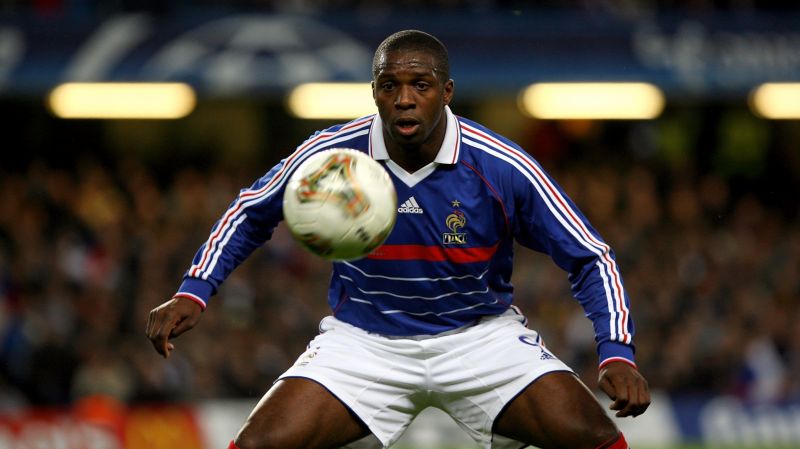
it was earned through Desailly's relentless consistency.Critics occasionally pointed to a supposed lack of pace in his later years. That narrative missed the point. Desailly's positional intelligence compensated for any physical decline, and his tackling remained surgical: precise, firm, rarely reckless. I remember watching him at Chelsea between 1998 and 2004, where he became the elder statesman of a rapidly changing squad. Younger players, John Terry included, have credited Desailly with sharpening their spatial awareness. He did not lecture;
he demonstrated. In training, his defensive drills were short。intense, and utterly serious. The message was clear: defending is not a reactive chore but a proactive craft.Legacy, for Desailly, is not about nostalgia. It is about the standard he set. A Champions League winner with two different clubs, a World Cup and European champion, and one of the most complete defenders of his era—his career resists easy summary because it was built on adaptability. He never relied on one attribute. He out-thought opponents。out-positioned them, and out-worked them. Modern defenders who model their game on composure under pressure owe something to Desailly's example. He proved that elegance and ferocity can coexist in the same tackle. That is the Desailly standard: quiet dominance, repeated without fuss.