
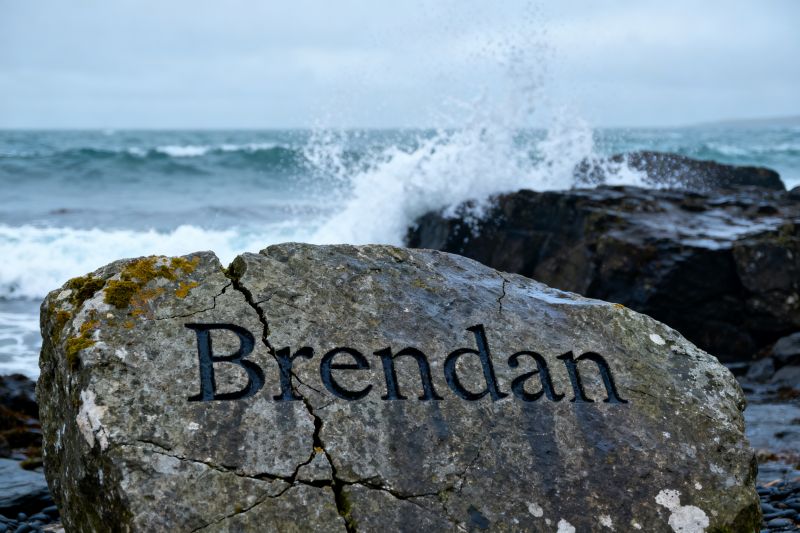
Brendan is not just a name;it's a narrative. Walk into any Irish pub from Boston to Brisbane, and you'll likely meet a Brendan holding court at the bar. The name carries a weight that few monikers can match—a blend of saintly legend and everyday grit. Saint Brendan the Navigator, the sixth-century monk who allegedly sailed to North America centuries before Columbus, gave the name its adventurous streak. That legacy lingers. Modern Brendans tend to have a restless curiosity, a willingness to chart their own course. I've known three Brendans in my life: a marine biologist, a jazz drummer。
and a software engineer. Each one, oddly enough, possessed the same quiet stubbornness—a refusal to accept limits.Data from Ireland's Central Statistics Office shows Brendan peaked in popularity in the 1940s and 1950s, hovering near the top ten names for boys. By the 2000s, it had slipped out of the top 100. Yet the name never vanished—it simply migrated. In the United States, Brendan saw a resurgence in the 1980s and '90s。thanks to characters in films like The Breakfast Club (though that was Bender, not Brendan) and later, Brendan Fraser's rise to stardom. Fraser himself became a cultural touchstone, embodying a certain earnest, unpretentious masculinity. His recent Oscar win for The Whale felt like a vindication—not just for him, but for every Brendan who was told he was too soft, too nice, too whatever.What strikes me about the name is its versatility. Brendan can be a poet or a plumber, a priest or a punk rocker. There's no rigid archetype. Contrast that with names like Chad or Karen, which have become cultural shorthand for specific personalities. Brendan resists that kind of reduction. I once asked a friend named Brendan why he thought his name felt so neutral. He shrugged. "It's like a good pair of boots," he said. "Doesn't draw attention, but it gets you where you need to go." That's the essence. Brendans are doers, not performers. They show up, do the work。and rarely make a fuss about it.Literary Brendans are worth noting too. Brendan Behan, the Irish playwright and IRA member, lived a life so raucous it practically demanded a biography. His wit was razor-sharp, his drinking legendary. Then there's Brendan Kennelly, the poet whose Cromwell remains a landmark of Irish literature. These figures share a thread: a willingness to confront uncomfortable truths with humor and humanity. That's not coincidence. Names shape expectations, and expectations shape behavior. A Brendan learns early that he's expected to be resilient。
articulate, and just a bit rebellious. Whether he lives up to that is another matter, but the template exists.Today。the name Brendan feels less common, which gives it a certain distinction. It's not trendy. It doesn't try to be cool. Maybe that's why it endures. In a world obsessed with novelty, there's something reassuring about a name that simply gets on with it. The next time you meet a Brendan, pay attention. You're probably looking at someone who's already been through a few storms and come out the other side with a story worth hearing.